
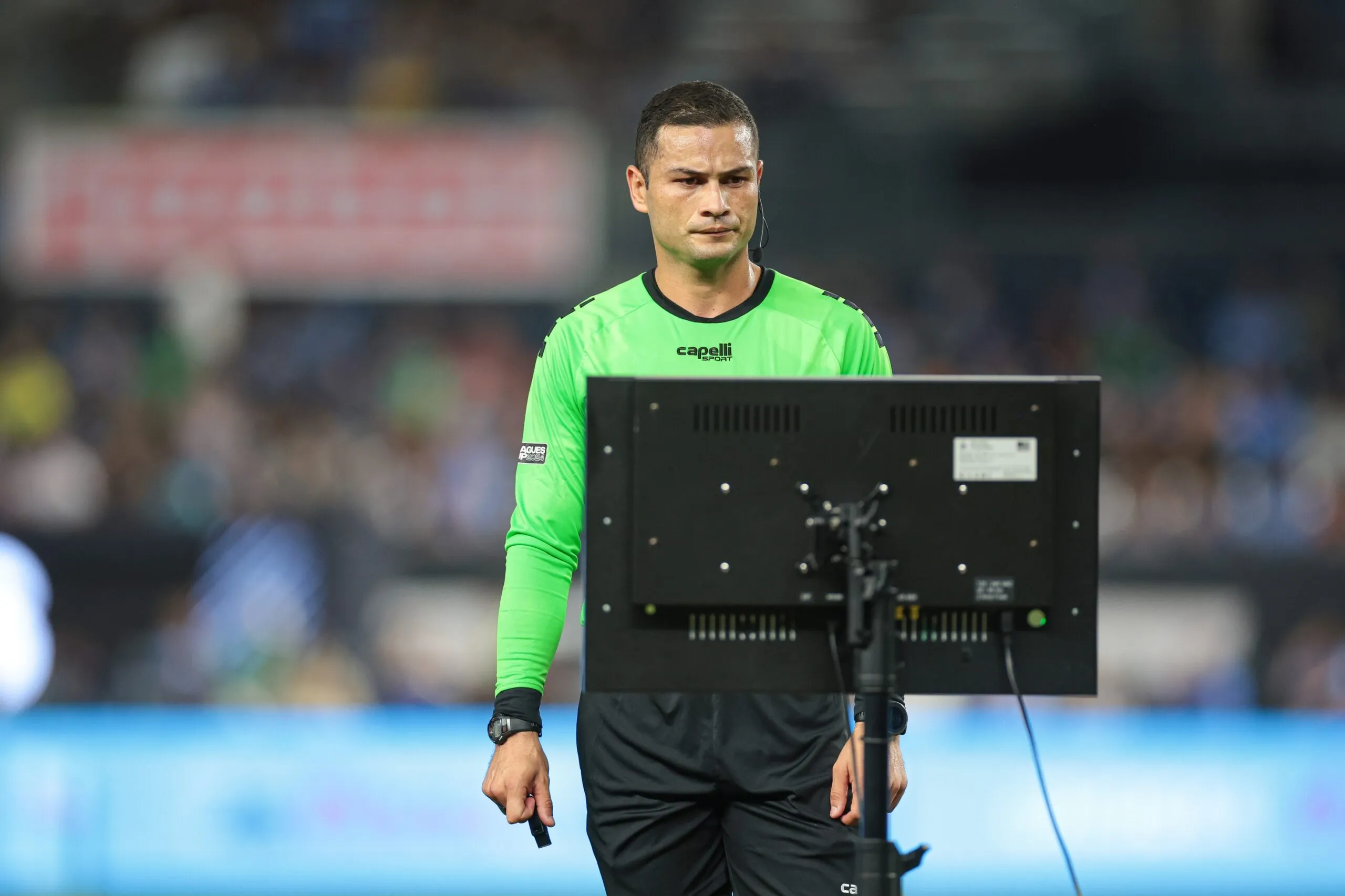
VAR Technology Impact has fundamentally changed the way we experience the beautiful game, turning split-second human decisions into high-definition debates that resonate across the globe. For decades, the flow of a football match relied entirely on the eyes of the referee and their assistants, leading to legendary moments of both brilliance and injustice. Today, we live in a digital era where every blade of grass is monitored by cameras, ensuring that the history of the sport is no longer written by undetected errors.
The journey toward integrating video assistance into football was not a sudden leap but rather a response to years of mounting pressure. We all remember the ghost goals and the missed handballs that decided World Cup qualifiers or league titles. Those moments created a collective cry for fairness that finally forced the International Football Association Board to embrace change. What followed was a technological revolution that has touched every level of professional competition.
When the system was first introduced, the primary goal was to eliminate “clear and obvious” errors. The idea was simple: provide a safety net for the officials on the pitch without destroying the natural rhythm of the game. However, the reality of implementing such a complex system has proven to be a fascinating study in human psychology and technical precision. It has forced us to ask deep questions about what we value more—mathematical accuracy or the spontaneous joy of a goal.
One of the most immediate effects of this change has been the transformation of the goal celebration. In the pre-VAR era, when the ball hit the back of the net, the release of emotion was instantaneous and absolute. Now, there is often a lingering shadow of doubt that follows every goal. Fans and players alike find themselves glancing toward the referee, waiting for the invisible check to be completed before truly letting go.
VAR Technology Impact on the fairness of the game is supported by statistics showing a significant increase in the percentage of correct decisions. Before the introduction of video reviews, referees were expected to be perfect in an increasingly fast-paced environment, an impossible task for the human eye. Now, with the ability to see multiple angles and slow-motion replays, the accuracy rate for match-changing incidents has climbed closer to ninety-nine percent in most major leagues.
This increase in accuracy has massive financial and sporting implications for clubs. A single incorrect offside call or a missed penalty can be the difference between a club staying in a lucrative league or facing the disaster of relegation. By providing a more level playing field, technology has protected the integrity of the competition and ensured that results are decided by talent and strategy rather than human fallibility.
However, the technical precision of the system has also led to the “toenail offside” controversy. We have seen goals disallowed because a player’s shoulder or toe was an inch ahead of the defender, a margin that no human could possibly detect in real-time. This level of scrutiny has sparked a debate about whether the offside rule was ever intended to be measured with such forensic detail. It has led to calls for a “buffer zone” to return the advantage to the attacking player.
The Psychological Burden on Referees and Players
The human element of officiating has not been removed by technology; rather, it has been placed under a different kind of pressure. Referees on the pitch now have to deal with the knowledge that their every move is being checked by a colleague in a remote booth. This can lead to a “safety net” mentality, where an official might hesitate to make a big call, knowing that the VAR will bail them out if they are wrong.
For the players, the VAR Technology Impact has changed the way they behave during high-tension moments. Defenders are now acutely aware that “dark arts” like shirt-pulling or subtle elbows in the penalty area are likely to be caught on camera. This has led to a cleaner game in many respects, as the threat of a retroactive red card or penalty act as a powerful deterrent against foul play.
We also see a change in how players interact with the referee. The iconic gesture of drawing a TV screen in the air has become a common sight on football pitches worldwide. It represents a new form of appeal, where players are no longer just arguing about what the referee saw, but what the cameras might have captured. This shift in communication has added a new layer of complexity to the relationship between the athletes and the officials.
In the VAR booth, the officials face an incredible amount of stress. They have to communicate clearly and quickly with the referee on the pitch while sifting through various camera feeds. The “clear and obvious” threshold is a subjective one, and what seems like a foul to one official might look like a fair challenge to another. This subjectivity is where the majority of modern football controversies are born.
VAR Technology Impact on Fan Engagement and Stadium Culture
The experience of the matchday fan has been significantly altered by the presence of video officiating. In the stadium, fans are often left in the dark during a long review, watching the referee stand still with their hand to their ear. Unlike viewers at home who see the replays and the lines being drawn, the match-going supporter has to rely on vague stadium announcements or small graphics on the big screen.
To combat this disconnect, some leagues have started experimenting with playing the audio of the referee’s communication with the VAR booth. This move toward transparency is designed to include the fans in the decision-making process and help them understand why a specific call was made. It is an acknowledgment that the “theatre” of football depends on the engagement and understanding of the audience.
The emotional rollercoaster of a disallowed goal is a unique pain for the modern football supporter. Imagine traveling five hundred miles to see your team score a last-minute winner, only for it to be chalked off three minutes later because of a foul in the buildup that happened forty yards away from the goal. This “delayed disappointment” has changed the way fans interact with the sport, leading to a more cautious and sometimes cynical atmosphere in the stands.
Despite these frustrations, the younger generation of fans often views the VAR Technology Impact as a natural part of the sport. Growing up in a digital world where instant replays and data are everywhere, they expect the same level of accuracy in football as they see in other areas of life. For them, the idea of a match being decided by a mistake that everyone with a smartphone can see is unacceptable.
Tactical Evolution in the Age of Video Review
Coaches and managers have had to adapt their tactical approaches to account for the presence of video assistance. The high defensive line, for example, has become more popular in some leagues because managers know that marginal offsides will now be caught. Conversely, strikers are being coached to time their runs with even more precision, knowing that the “benefit of the doubt” no longer exists in a world of high-speed cameras.
The way teams defend set-pieces has also shifted. In the past, crowded penalty areas were a haven for subtle fouls and tactical blocking. Now, every movement is scrutinized, forcing defenders to keep their hands down and focus purely on the ball. This has led to an increase in the number of penalties awarded during corner kicks, which in turn has forced teams to be more disciplined in their defensive marking.
We also see managers using the VAR breaks as mini-time-outs. While the referee is checking the monitor, coaches will often pull their players to the touchline to deliver tactical instructions or make substitutions. These unplanned pauses have changed the fitness requirements of the game, as players have to stay warm and focused during breaks that can sometimes last five or six minutes.
The “gamesmanship” of professional football has also evolved. Players might stay down after a challenge to ensure that the VAR has enough time to check for a potential red card incident. This has led to concerns about increased time-wasting, though many leagues have compensated for this by adding significant amounts of stoppage time at the end of each half to ensure the ball is in play for the intended duration.
The Technical Infrastructure Behind the Decision
The sheer amount of hardware required to run a successful VAR operation is staggering. A typical high-level match involves over thirty cameras, including ultra-slow-motion and 4K feeds. These cameras are synchronized to the millisecond, allowing the officials in the Video Operation Room to see the exact moment a ball is kicked and the exact position of every player’s limb at that moment.
The communication link between the pitch and the booth must be instantaneous and crystal clear. Any delay in the audio or video feed can lead to confusion and errors in judgment. This requires a robust fiber-optic network within the stadium and, in some cases, remote hubs where officials monitor multiple games at once from a central location.
We are now moving toward an era of “Semi-Automated Offside Technology,” which we saw successfully implemented in the recent World Cup. This system uses limb-tracking cameras and a sensor inside the ball to instantly calculate the offside line. By removing the need for a human to manually draw lines on a screen, the VAR Technology Impact is becoming faster and more objective, reducing the time taken for a decision from minutes to seconds.
This move toward automation is the next frontier for the sport. As AI becomes more sophisticated, it may eventually be able to flag potential fouls or handballs to the referee without the need for a human VAR to spot them first. While some fear this will lead to a “robotic” version of football, others see it as the ultimate solution to the problem of human bias and inconsistency.
Global Consistency and the Divide in Officiating
One of the biggest challenges facing the sport is the lack of consistency in how video reviews are used across different countries. What is considered a penalty in the Premier League might be ignored in La Liga or Serie A. This divergence in “interpretation” can be confusing for fans and players, especially during international competitions like the Champions League.
FIFA and regional governing bodies are working hard to standardize the VAR protocols, but cultural differences in how the game is played and officiated remain a hurdle. Some leagues prefer a “light touch” where the VAR only intervenes in extreme cases, while others prefer a more forensic approach. This ongoing debate is a key part of the VAR Technology Impact on the global identity of the sport.
The cost of the technology is another factor that creates a divide in the global game. While top-flight European leagues can afford the millions of dollars required to install and run these systems, smaller leagues and emerging football nations are often left behind. This has led to the development of “VAR Light,” a more affordable version of the system with fewer cameras and less infrastructure, designed to bring the benefits of video review to the rest of the world.
As the technology becomes more widespread, the “technological divide” in football remains a concern. We are seeing a world where the game is officiated differently depending on the wealth of the league, which can have implications for player development and international competition. Ensuring that the benefits of digital officiating are accessible to all is a major goal for the future of the sport.
Integrity and the Future of Fair Play
Ultimately, the goal of video assistance is to protect the integrity of the game we love. While the process has been bumpy and the debates have been fierce, it is hard to argue that the sport is not fairer today than it was twenty years ago. The era of the “hand of god” goal or the goal that clearly crossed the line being missed is largely a thing of the past.
The VAR Technology Impact has forced us to embrace a more modern version of football, one that acknowledges the limitations of human perception and utilizes the power of technology to enhance the competition. It is a journey of constant refinement, with every season bringing new tweaks to the rules and the protocols to better serve the game.
We must remember that at its heart, football is about people—the players, the coaches, the officials, and the fans. Technology is simply a tool designed to help those people do their jobs better and enjoy the game more. As we look to the future, the challenge will be to find the perfect balance between the precision of the machine and the passion of the human spirit.
The beautiful game has survived many changes over its long history, and it will survive this one too. The digital referee is here to stay, and while we might always find something to argue about, that is part of what makes football so special. The debate, the drama, and the pursuit of justice are all part of the story that continues to unfold every time the whistle blows.
As the cameras get faster and the AI gets smarter, we can expect the system to become even more invisible and seamless. The ultimate success of the technology will be when we stop talking about it altogether, and it becomes as natural as the grass on the pitch or the air in the ball. Until then, we will continue to watch, to cheer, and to wait for that final check before celebrating.
dodgers vs toronto blue jays match player stats
canada men’s national soccer team vs united states men’s national soccer team lineups
toronto blue jays vs dodgers match player stats
golden state warriors vs houston rockets match player stats
los angeles rams vs philadelphia eagles match player stats