
In the world of politics and finance, few subjects spark as much public curiosity—and debate—as the Nancy Pelosi stock portfolio. As Speaker Emerita of the U.S. House of Representatives, Nancy Pelosi has long been a lightning rod in American politics. But over the past few years, it’s not just her political positions that have made headlines—it’s her savvy stock trades.
Whether you’re a seasoned investor, a political observer, or just someone curious about how public officials manage their wealth, the story of the Nancy Pelosi stock portfolio is fascinating. This article explores what’s in her portfolio, why it’s controversial, how it’s tracked, and what it means for the larger conversation about finance and ethics in Washington.
Let’s dive in.
What Is the Nancy Pelosi Stock Portfolio?
The Nancy Pelosi stock portfolio refers to the publicly reported stock trades made by Nancy Pelosi and her husband, Paul Pelosi. Because she’s a public official, Pelosi is required by law to file periodic transaction reports (PTRs) under the STOCK Act (Stop Trading on Congressional Knowledge Act), which was passed in 2012.
These filings reveal stock purchases, sales, and options trades—typically made by Paul Pelosi, who is a successful businessman and investor in his own right. Still, because of her high-ranking political role, every move in the Nancy Pelosi stock portfolio draws significant attention from investors and watchdog groups alike.
Why the Nancy Pelosi Stock Portfolio Matters
There are a few reasons why people care so much about the Nancy Pelosi stock portfolio:
-
Transparency and accountability: As an elected official, Pelosi is expected to act in the public’s best interest. Watching her trades gives insight into whether politicians might be benefitting from insider knowledge.
-
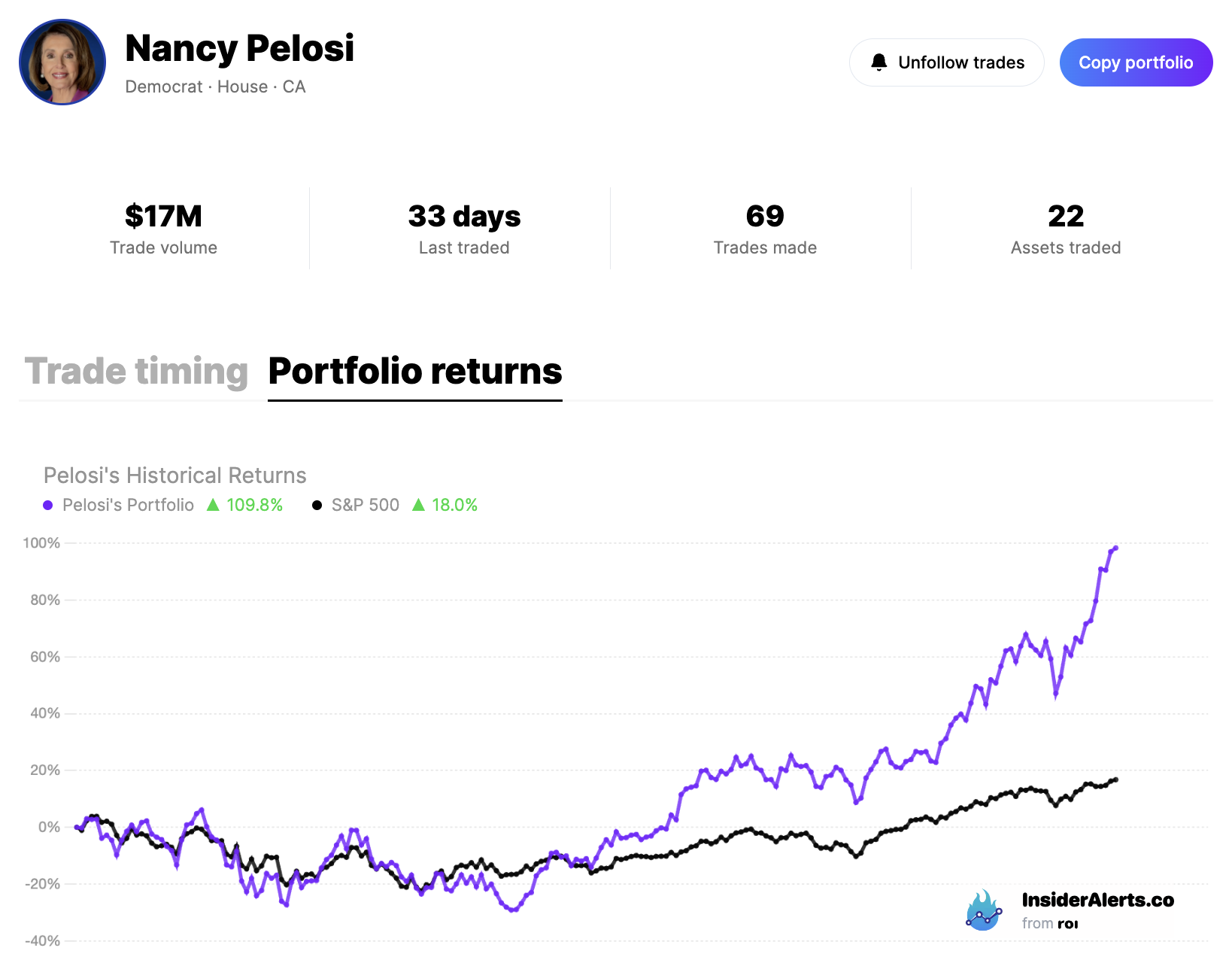
Impressive returns: The Nancy Pelosi stock portfolio has historically performed quite well—often outperforming major indexes like the S&P 500, which raises eyebrows and interest.
-
Market influence: Retail traders on platforms like Reddit’s WallStreetBets and TikTok often track her trades and mimic them, believing the portfolio may have an edge.
In fact, many websites and apps have emerged that allow people to monitor the Nancy Pelosi stock portfolio in real-time.
What’s Typically in the Nancy Pelosi Stock Portfolio?
So what exactly does the Nancy Pelosi stock portfolio include? While her holdings change over time, there are a few familiar names that regularly appear:
-
Apple (AAPL)
-
Nvidia (NVDA)
-
Tesla (TSLA)
-
Alphabet (GOOGL)
-
Microsoft (MSFT)
-
Salesforce (CRM)
These are all blue-chip tech stocks that have performed strongly in recent years. It’s no surprise that the Nancy Pelosi stock portfolio often leans heavily into technology, a sector that’s been at the center of innovation and stock market gains.
The Role of Paul Pelosi
Much of the trading activity in the Nancy Pelosi stock portfolio is executed by Paul Pelosi, a venture capitalist and financial expert. While Nancy Pelosi has stated that she does not personally manage or direct her investments, critics argue that her access to sensitive, non-public information could influence decision-making—directly or indirectly.
Still, no official misconduct has been proven. However, the optics of the Nancy Pelosi stock portfolio performing exceptionally well during periods of economic uncertainty or major legislative action continues to fuel skepticism.
How the Public Tracks the Nancy Pelosi Stock Portfolio
Due to growing public interest, several online tools and communities have emerged to keep an eye on the Nancy Pelosi stock portfolio. These include:
-
Quiver Quantitative
-
HouseStockWatcher
-
PelosiTracker on Twitter
-
TikTok accounts analyzing stock trades
These platforms automatically update every time a new transaction report is filed. Within minutes, retail traders know what’s been bought or sold in the Nancy Pelosi stock portfolio—and many make trades accordingly.
This rise of “Pelosi trading” is part of a larger trend of retail investors mimicking the strategies of prominent politicians.
The Debate Over Ethics and Insider Trading
At the heart of the Nancy Pelosi stock portfolio conversation is a heated ethical debate: Should lawmakers be allowed to trade individual stocks at all?
Critics argue that elected officials, especially those with access to confidential briefings or who shape economic policy, should not be actively trading. There’s a concern that such trades—even if legal—could create conflicts of interest or give the appearance of impropriety.
The Nancy Pelosi stock portfolio often comes up in discussions about banning congressional stock trading altogether. In fact, in recent years, both Republicans and Democrats have proposed bills that would restrict or completely ban lawmakers from trading stocks while in office.
Pelosi herself initially resisted the idea, but later expressed openness to legislation on the matter.
Performance of the Nancy Pelosi Stock Portfolio
One of the reasons the Nancy Pelosi stock portfolio draws so much attention is its strong performance over the years. Analysts who track the portfolio have noted that many trades appear well-timed—buying options before key tech rallies, or selling ahead of dips.
While some of this may be pure investment acumen, others believe it reflects deeper knowledge of policy decisions, economic forecasts, or legislative developments.
Retail investors often try to replicate the Nancy Pelosi stock portfolio, hoping to ride the same waves that have made it so successful. Some even jokingly refer to her as “the Queen of Investing.”
Examples of Controversial Trades
There have been a few moments when the Nancy Pelosi stock portfolio made headlines for particularly well-timed moves:
-
Nvidia Call Options (2021): Paul Pelosi purchased call options on Nvidia shortly before the company posted strong earnings and the stock soared. The timing led to heavy media coverage.
-
Alphabet Trades: Another instance involved buying large amounts of Alphabet (Google) before favorable tech legislation.
These moments often reignite debates about whether members of Congress should be allowed to trade at all, with the Nancy Pelosi stock portfolio being the poster child of the conversation.
Public Sentiment and Social Media Buzz
Social media has played a huge role in fueling the interest in the Nancy Pelosi stock portfolio. TikTok videos explaining her trades go viral regularly. Reddit threads analyze her holdings as if she were Warren Buffett.
Memes, parody accounts, and even merch have been created around the topic, turning what was once a dry subject—political financial disclosures—into mainstream internet culture.
In short, the Nancy Pelosi stock portfolio has become more than a financial case study; it’s become a pop culture phenomenon.
What the Nancy Pelosi Stock Portfolio Teaches Us About Investing
Whether you admire her portfolio or question the ethics behind it, there’s no denying that the Nancy Pelosi stock portfolio provides a few key lessons for everyday investors:
-
Invest in what you know: The portfolio leans heavily on proven tech companies with strong fundamentals.
-
Long-term thinking pays off: Many of the stocks have been held through volatility, resulting in strong gains.
-
Transparency helps accountability: The ability to track trades gives the public tools to evaluate fairness.
Even if you’re not mimicking her trades, the Nancy Pelosi stock portfolio offers a glimpse into the investment strategies used by America’s political elite—and how timing, knowledge, and access can shape outcomes.
The Push for Reform
Because of the controversy surrounding the Nancy Pelosi stock portfolio, momentum is building around stock trading reform in Congress. Multiple bills propose restricting members from owning individual stocks, requiring blind trusts, or increasing penalties for violations of the STOCK Act.
While it’s unclear whether these reforms will pass, the attention brought by the Nancy Pelosi stock portfolio has certainly shifted public opinion. More Americans than ever are demanding greater transparency and ethics from their leaders when it comes to personal finances.
Final Thoughts
The Nancy Pelosi stock portfolio is more than just a list of trades—it’s a symbol of the intersection between politics, money, and power. It raises questions about fairness, access, and accountability that are central to a healthy democracy.
At the same time, it’s a fascinating example of successful investing, one that’s studied by retail traders, financial analysts, and political watchdogs alike. As long as public officials continue to influence policy while holding financial assets, the scrutiny around the Nancy Pelosi stock portfolio will remain a hot topic in both finance and politics.
Whether you see it as a savvy investing case or a red flag for reform, there’s no denying that the Nancy Pelosi stock portfolio will continue to shape conversations in Washington—and on Wall Street—for years to come.