


Disruptive Innovation Models have quietly rewritten the rules of competition in nearly every industry, from transportation and media to finance and healthcare. What once looked like small, unconventional ideas have evolved into forces that challenge established giants and redefine customer expectations. These models are not about incremental improvement. They are about changing the game entirely.
Think about how streaming platforms transformed entertainment or how ride-sharing apps altered urban mobility. These shifts did not happen because incumbents lacked expertise. They happened because new models approached the same problems differently, prioritizing accessibility, simplicity, and unmet customer needs.
Table of Contents
ToggleUnderstanding the Core Idea Behind Disruptive Innovation Models
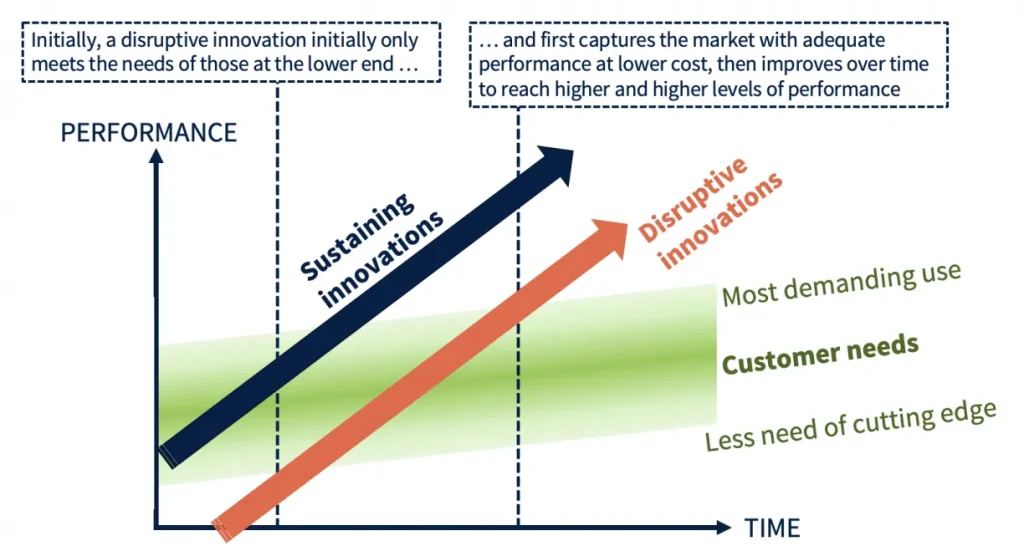
At their foundation, disruptive innovation models focus on serving overlooked or underserved markets. Traditional businesses often concentrate on their most profitable customers, leaving gaps that newcomers exploit with simpler, more affordable solutions.
Over time, these solutions improve, gain wider acceptance, and eventually compete head-on with established offerings. This gradual evolution makes disruption difficult to predict, even for experienced industry leaders.
What makes these models powerful is not just technology, but mindset. They challenge assumptions about value, delivery, and scale, forcing industries to rethink what truly matters to customers.
The Origins and Evolution of Disruptive Innovation Models
The concept gained attention when researchers observed how smaller players consistently overtook market leaders despite having fewer resources. These challengers did not try to beat incumbents at their own game. Instead, they created new rules.
Early examples appeared in manufacturing and consumer electronics, but the digital era accelerated adoption. Cloud computing, mobile connectivity, and data analytics lowered entry barriers, enabling rapid experimentation.
As markets evolved, disruptive models expanded beyond products to include platforms, ecosystems, and service-based approaches that reshaped entire value chains.
Real-World Stories That Explain Disruptive Innovation Models
Consider a startup that offered basic online education at a fraction of traditional costs. Initially dismissed as inferior, it attracted learners who could not afford conventional programs. Over time, the platform improved content quality, gained accreditation, and challenged established institutions.
This pattern repeats across industries. What starts as a modest alternative becomes a credible competitor, then a market leader. These stories highlight how disruption unfolds quietly before becoming impossible to ignore.
Such examples build trust in the concept by grounding theory in lived experience rather than abstract ideas.
Why Established Companies Struggle With Disruptive Innovation Models
Large organizations often possess deep expertise, strong brands, and loyal customers. Ironically, these strengths can become barriers to disruption.
Existing revenue models, performance metrics, and customer expectations make it difficult to invest in solutions that initially appear less profitable. Leaders fear cannibalizing their own products, even when change is inevitable.
Disruptive innovation models demand patience and willingness to embrace uncertainty. Companies that succeed create separate teams or units with the freedom to experiment without legacy constraints.
Disruptive Innovation Models in the Digital Economy
Digital transformation has amplified the impact of disruptive models. Software-based solutions scale faster, adapt quicker, and reach global audiences with minimal physical infrastructure.
Subscription services, digital marketplaces, and platform-based ecosystems exemplify this shift. They redefine ownership, access, and value creation in ways traditional models struggle to match.
In this environment, speed of learning often matters more than size. Organizations that iterate rapidly and listen closely to users gain a decisive advantage.
The Role of Customer-Centric Thinking
Customer focus sits at the heart of disruption. Rather than asking how to outperform competitors, innovators ask how to remove friction from user experiences.
This mindset leads to simpler interfaces, transparent pricing, and flexible delivery models. Customers respond not just with adoption, but with advocacy.
By aligning offerings with real needs rather than assumed preferences, disruptive models build trust and long-term loyalty.
Disruptive Innovation Models and Business Sustainability
Sustainability increasingly intersects with innovation. New models often consume fewer resources, reduce waste, and optimize utilization through sharing or digital delivery.
For example, asset-light platforms reduce the need for ownership while increasing access. This efficiency aligns economic growth with environmental responsibility.
Organizations embracing such models position themselves as forward-thinking and socially responsible, strengthening brand credibility.
Organizational Culture and Disruptive Innovation Models
Culture plays a decisive role in whether disruption thrives or fails. Hierarchical structures and rigid processes can stifle experimentation.
Innovative organizations encourage curiosity, tolerate failure, and reward learning. They empower teams to challenge assumptions and test ideas quickly.
This cultural alignment supports sustainable disruption rather than isolated innovation efforts that fade over time.
Leadership and Strategic Vision
Leadership commitment determines the success of disruptive initiatives. Leaders must articulate a clear vision and protect emerging models from short-term pressures.
Strategic patience allows innovations to mature before being judged by traditional metrics. Transparent communication builds internal trust and external credibility.
Experienced leaders who balance ambition with discipline create environments where disruption becomes intentional rather than accidental.
Disruptive Innovation Models Across Industries
Healthcare has seen disruption through telemedicine and remote monitoring, expanding access while reducing costs. Finance experienced similar shifts with digital payments and alternative lending platforms.
Retail transformed through e-commerce and direct-to-consumer brands that bypass intermediaries. Each industry adapts the core principles of disruption to its unique context.
These variations demonstrate the versatility of disruptive innovation models across diverse markets.
Technology as an Enabler, Not the Driver
While technology accelerates disruption, it is not the sole driver. The real transformation lies in how technology supports new ways of delivering value.
Cloud services, artificial intelligence, and data analytics enable personalization and scalability. However, without a clear model, technology alone cannot disrupt.
Successful innovators align technological capability with strategic intent and customer insight.
Risk Management in Disruptive Innovation Models
Disruption involves uncertainty, but it does not mean recklessness. Effective innovators manage risk through experimentation, feedback, and staged investment.
Small-scale pilots test assumptions before large commitments. Continuous learning reduces exposure and builds confidence.
This disciplined approach reinforces credibility and demonstrates expertise rather than blind optimism.
The Impact on Workforce and Skills
As business models change, so do skill requirements. Employees must adapt to new tools, processes, and ways of thinking.
Organizations investing in learning and development maintain momentum. Cross-functional collaboration fosters creativity and problem-solving.
Supporting people through change strengthens trust and sustains long-term innovation capability.
Ethical Considerations and Trust
Disruptive models can create social impact, both positive and negative. Ethical considerations around data privacy, labor practices, and accessibility require careful attention.
Transparent governance and responsible decision-making enhance trust among customers, regulators, and partners.
Ethical disruption builds authority and long-term legitimacy rather than short-term advantage.
Measuring Success Beyond Traditional Metrics
Traditional metrics may not capture early success in disruptive initiatives. Initial adoption, engagement, and learning often matter more than immediate profitability.
Organizations that adjust evaluation frameworks gain clearer insight into progress. Over time, these alternative metrics translate into sustainable financial performance.
This broader perspective reflects experience and strategic maturity.
Globalization and Local Adaptation
Disruptive models often scale globally, but success depends on local adaptation. Cultural preferences, regulatory environments, and infrastructure vary widely.
Flexible models that respect local contexts outperform rigid global strategies. Listening to regional insights builds relevance and trust.
Balancing global vision with local execution enhances resilience and reach.
The Competitive Advantage of Disruptive Innovation Models
Once established, disruptive models create strong competitive moats. Network effects, data accumulation, and customer loyalty reinforce position.
Late entrants struggle to replicate ecosystems built over time. This advantage stems from strategic foresight rather than mere speed.
Organizations that commit early and learn continuously secure lasting leadership.
Disruptive Innovation Models and Long-Term Growth
Sustainable growth increasingly depends on adaptability. Markets evolve, technologies advance, and customer expectations shift.
Companies embracing Disruptive Innovation Models remain flexible, curious, and resilient. They view change as opportunity rather than threat.
This mindset transforms uncertainty into a catalyst for progress.
Experience, Authority, and Trust in Disruptive Innovation
Experience grounds innovation in reality. Authority emerges from consistent delivery and thought leadership. Trust develops through transparency and ethical practice.
Disruptive innovation models that respect these principles achieve lasting impact. They do not chase trends but build meaningful value over time.
By combining strategic insight with human understanding, organizations redefine what success looks like in a changing world.
The Ongoing Influence of Disruptive Innovation Models
Industries will continue to evolve as new players challenge old assumptions. The pace of change may vary, but the direction remains clear.
Organizations that understand disruption deeply, invest wisely, and act responsibly will shape the future rather than react to it.
The influence of Disruptive Innovation Models will persist as long as unmet needs exist and creative minds seek better ways to serve them.
Read also: