


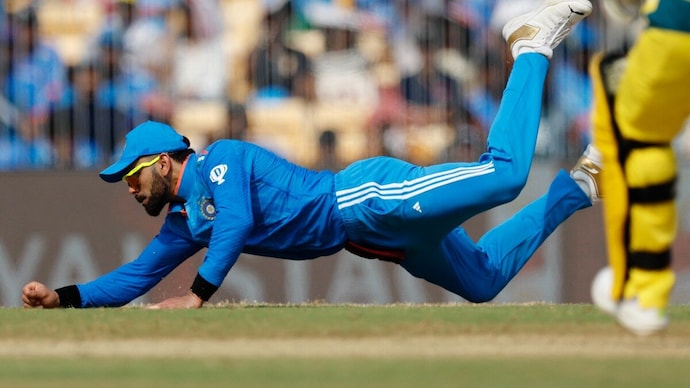
Fielder Agility Training is not just about fitness; it is the hidden craft that separates ordinary athletes from truly elite fielders who can change games with moments of lightning instinct. Modern cricket rewards anticipation even more than speed, because the great fielder is already moving before the batter finishes the shot. The body reacts after the mind prepares, and no world-class fielder is born with that ability by default. It is developed through repetition, mental programming and biomechanical sharpness that most viewers never get to see.
The transformation from a good fielder to a world-class fielder is mostly invisible, happening in early morning drills, micro-movement sessions and recovery blocks that upgrade nervous-system efficiency. Unlike batting or bowling, fielding is not about one skill. It combines agility, explosiveness, reaction timing, hip strength, landing control and emotional stillness under sudden pressure. The world’s best fielders train like sprinters and gymnasts combined, which is why their movements look effortless even when the effort is enormous.
The Physical Blueprint Behind Elite Fielding
A top-level fielder treats movement like choreography. The first step is acceleration, the second is body alignment, the third is launch control. If any of these stages fail, the dive is wasted or the catch becomes unstable. The match-winning plays are not lucky—they are rehearsed until instinct replaces hesitation.
Speed alone is not enough. The greatest strength of elite fielders is deceleration, the ability to stop in a split second without losing balance. In short chases, a fielder who stops better arrives earlier. This is why Fielder Agility Training focuses more on controlled braking than constant sprinting. The ankle and hips become shock absorbers that protect the body while still releasing force explosively.
Mental Programming and Anticipation – Fielder Agility Training
Every highlight catch you see began two seconds earlier as a subconscious prediction. The elite fielder studies bat angles, body positions and even follow-through delays. These tiny reads create a mental map that tells him where the ball will be before it travels. That is why the great fielder is already closing ground while others freeze.
The agility is not just physical; it is neurological. The nervous system needs repetition until reaction becomes instinct. Visual drills, hand-to-eye distortions, and delayed-cue training sharpen this inner radar. The more a fielder feels the game instead of merely watching it, the more natural the alignment between anticipation and movement becomes. (Fielder Agility Training)
Explosiveness: The Engine of Modern Fielding
A fielder who explodes from zero to full speed in two steps is always in play. That is the reason elite players train with micro-sprints, not marathons. Their shoulders must whip, their hips must rotate, and their landing must remain safe. Explosive movement is not chaos; it is directed violence wrapped in clean mechanics.
This is also why great fielders glide instead of stomp. The foot strike is gentle because the body is poised to redirect energy instantly. The less friction absorbed by joints, the more power flows into acceleration. Craftsmanship lives inside every stride. (Fielder Agility Training)
Core Stability and Body Alignment
The modern cricket athlete relies heavily on rotational strength. When the core is stable, reaction speed rises naturally because the brain trusts the body to hold position during impact. Elite fielders do not train abs for looks; they train for control. Without a stable core, the landing angle becomes unsafe and the dive becomes recovery instead of capture.
This is where Fielder Agility Training separates amateurs from masters. A powerful core lets the body twist in mid-air while still keeping the hands soft around the ball. That softness is not weakness—it is control through tension release.
Ground Coverage and Micro-Movements – Fielder Agility Training
The best fielders never stand still. They stay alive inside their stance, weight slightly forward, hips unlocked, breathing shallow and ready. These micro-movements keep the nervous system awake. A static fielder reacts late; a dynamic one reacts before he thinks. The shift from coiled stillness to controlled sprinting is a neurological reflex built through consistent conditioning. (Fielder Agility Training)
It is also why fitness for fielding is not bulky. Heavy mass slows the first step and clutters the hip hinge. The truly elite fielders are built like sprinting archers—lean, powerful, flexible, but above all responsive.
Muscle Memory Built Through Repetition
Repetition is not boring for a fielder. It is reinforcement. The more the body repeats a movement, the faster the nervous system files it into instinct. What looks like improvisation is usually the final layer of structure beneath thousands of previous executions. Even awkward catches have a blueprint; fortune only assists form. (Fielder Agility Training)
A fielder who has chased ten thousand simulated strikes never panics when the real one arrives. The body speaks before the mind intervenes. This is the invisible muscle memory that becomes visible only during match-defining moments. (Fielder Agility Training)
Why Professionals Prioritize Recovery as Much as Training
The shock absorption of dives and slides is extremely taxing on hips, ribs and forearms. World-class fielders recover as aggressively as they train. If the landing muscles remain fatigued, footwork breaks down. Without clean footwork, there is no acceleration. Without acceleration, there is no reach. That is the domino chain the casual viewer never sees. (Fielder Agility Training)
Breathwork and recovery are part of the practice, not breaks from it. The nervous system needs resets as much as the body needs refueling. Elite routines are built around readiness, not exhaustion.
The Connection Between Confidence and Movement
Even the greatest fielders make unbelievable catches look calm because emotional tension is absent. Confidence is not showmanship; it is trust in preparation. When the body knows what to do, the mind does not panic. The art of fielding is quiet mastery, and the best in the world never chase the moment—they arrive early enough to welcome it.
The hallmark of Fielder Agility Training is not speed, but certainty. The fielder is not surprised by the ball—he has already met it halfway.
Read also:
priyansh arya stats
zimbabwe vs new zealand
india women’s national cricket team vs sri lanka women players
pakistan national cricket team vs bangladesh national cricket team match scorecard